
The Degree Isn’t Disappearing. But It May No Longer Be Enough.
Why the next generation of education may be defined by what learners can demonstrate not simply what they have studied.
For generations, the university degree has served as one of the clearest signals of educational achievement. It tells an employer that someone completed a defined programme of study. It provides evidence of academic attainment. It can open doors to employment, professional opportunities and further education. But the environment around the degree is changing.
Artificial intelligence is reshaping how work is performed. Skills are changing faster, Learning is becoming increasingly modular. People are acquiring capabilities through professional experience, online learning, projects and other pathways outside traditional academic programmes. At the same time, employers are increasingly interested in what people can demonstrate, not simply what qualifications they hold. This does not mean the degree is becoming irrelevant.
Rather, it raises a more important question:
What does a degree need to tell us in a world where learning, work and technology are changing so quickly?
THE SHIFT FROM QUALIFICATION TO CAPABILITY
The conversation around skills-first hiring has gained momentum, but the underlying issue is bigger than recruitment. It is about how society identifies, develops and evaluates capability.
The OECD’s 2026 research on skills-first labor markets notes that formal qualifications remain important, but qualifications alone do not necessarily capture the full range of skills an individual possesses. The report points toward more detailed approaches to identifying and recognizing skills alongside traditional qualifications. That distinction matters.
A degree can tell us what someone studied, It can tell us the level and duration of that study, But it does not necessarily tell us everything about what that person can do today.
Someone may have developed new capabilities through professional experience. Another may have acquired technical skills through independent learning. Someone else may have built a portfolio of projects that demonstrates capabilities that are difficult to capture through conventional academic assessment.
The emerging education ecosystem therefore faces a more complicated task:
How do we move from measuring what someone has learned to understanding what they can demonstrate?
AI IS CHANGING WHAT WE NEED TO MEASURE
Artificial intelligence makes that question even more important. Generative AI can now produce text, analyse information, write code, generate images and assist with a growing range of cognitive tasks. That does not make human capability irrelevant, It changes the kinds of capability that become important.
As AI takes on more routine cognitive work, education may need to place greater emphasis on capabilities that require context, judgement and human decision-making.
The question for education therefore becomes more nuanced.
If technology can increasingly assist with producing an answer, how should we determine whether a learner genuinely understands the problem, can reason through it and can apply what they know?
That may require more practical projects, More simulations, More problem-solving, More authentic demonstrations of capability, And increasingly, more sophisticated assessment environments.
THE ASSESSMENT QUESTION
This is where the conversation becomes particularly interesting.
For decades, assessment has largely operated within familiar environments: classrooms, examination halls, controlled test centres and structured academic programmes.
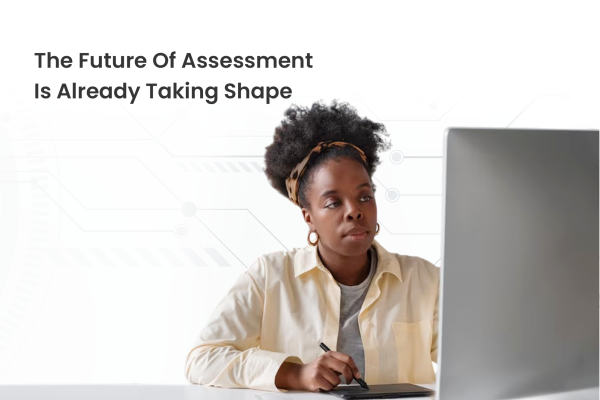
Digital technology is changing those environments. Assessment can increasingly take place remotely, across different locations and through digital platforms.
That creates opportunities but it also creates new questions. How do we verify the person taking the assessment? How do we maintain assessment integrity? How do we distinguish genuine understanding from technological assistance? And how do we create assessment environments that measure capability rather than simply the ability to produce a correct answer?
These are not merely technology questions. They are questions about trust in the assessment process itself.
THE IDENTITY LAYER IS BECOMING DIGITAL
One of the less discussed consequences of digital assessment is that identity becomes part of the assessment infrastructure.
Consider a traditional examination.
A candidate arrives at a physical location. Their identity is checked. Their attendance is recorded. They complete the assessment under defined conditions.
Now move that process online, the physical examination room disappears.
The candidate may be thousands of kilometres away from the institution, The assessment may take place through a browser rather than a supervised examination hall. But one fundamental question remains:
Who is actually taking the assessment?
This is where identity technology becomes relevant.
In Nigeria, the West African Examinations Council deploys Botosoft’s CIVAMPEMS identity-management system for examination processes. According to Botosoft technologies, the system uses machine-readable smart cards and mobile terminals to support candidate identification, validation, attendance and examination management, with deployment across Nigeria covering more than 2.2 million students annually.
The significance goes beyond the technology itself, It demonstrates an important principle:
A trusted assessment begins with a trusted identity.
And that principle becomes even more important when the assessment environment moves online.
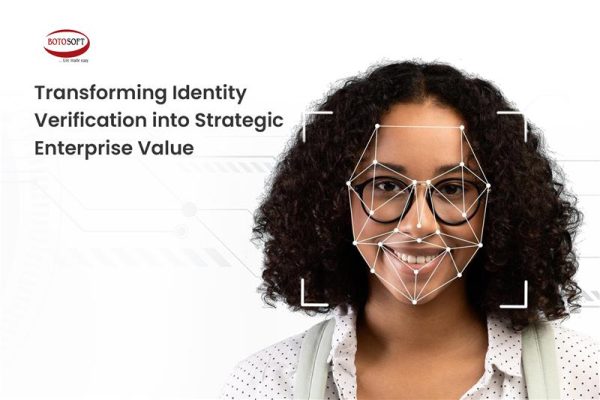
Botosoft’s E-Presence provides another example. According to the company’s product documentation, the system is designed for online assessment environments and uses webcam-based facial recognition to verify candidates, monitor examination activity and generate reports relating to identity verification, access to the test environment and potential malpractice.
The broader shift is significant.
Assessment is moving from being a single event to becoming an increasingly connected digital process involving identity, environment, assessment and evidence.
THE EARLY-CAREER PARADOX
There is another challenge emerging alongside AI. If technology increasingly automates routine or entry-level tasks, how do young professionals gain the experience employers want?
Historically, early-career workers learned by performing relatively simple tasks and gradually taking on more complex responsibilities. But if some of those tasks can increasingly be automated, organizations and educational institutions may need to rethink how people acquire experience. This could increase the importance of:
- simulations;
- project-based learning;
- apprenticeships;
- structured practical assessments;
- internships;
- work-integrated learning;
- competency-based evaluation.
The challenge is not simply producing more graduates. It is creating credible opportunities for people to demonstrate progression from knowledge to capability.
That distinction could become one of the defining questions in education over the next decade.
FROM KNOWLEDGE TO DEMONSTRABLE CAPABILITY
For much of modern education, success has often been associated with the ability to acquire and reproduce knowledge. That model is being tested by a world in which information is increasingly accessible and AI can assist with retrieving, processing and producing it. The value of education therefore cannot simply be the possession of information. It increasingly lies in what a person can do with information.
Can they identify the right problem? Can they determine which information matters? Can they challenge an assumption? Can they apply knowledge in an unfamiliar situation? Can they make a decision when there is no perfect answer? Can they collaborate with other people? Can they use AI without becoming dependent on it?
These are much harder capabilities to measure through conventional examinations. And that may be one reason assessment itself is likely to evolve.
WHAT SHOULD EDUCATION MEASURE NOW?
Perhaps the most useful way to think about the future is not to ask whether degrees will survive because they will continue to serve an important role in education and professional life. The more interesting question is what we build around them.
Education could progressively provide richer evidence of Knowledge, Skills, Application, Reasoning, Adaptability, Judgement, Collaboration and Integrity, in which reasonable confidence in the assessment environment that the demonstrated performance belongs to the individual being assessed.
This is a much richer model of educational achievement.
THE DEGREE STILL MATTERS. BUT THE EVIDENCE AROUND IT MATTERS MORE.
The future does not necessarily require us to choose between degrees and skills. It may require us to connect them. The degree provides academic context. Assessment provides evidence. Experience provides application. Projects demonstrate capability. Technology provides new ways to measure performance. AI provides new tools and new challenges across the entire system.
The result is an education ecosystem that looks increasingly less like a system designed simply to deliver knowledge and more like one designed to develop and demonstrate capability. That may be the real transformation taking place.
The question is no longer simply whether someone has completed a programme of study. It is whether the education system can give learners meaningful opportunities to demonstrate what they understand, what they can do and how effectively they can apply their knowledge in a changing world.
Because the degree may not be disappearing.
But the definition of what a qualification needs to prove is changing.
THE QUESTION FOR THE INDUSTRY
If a degree tells us what someone studied, what should tell us what they can actually do?
And perhaps even more importantly:
How do we build an education system capable of proving it?
Digital Education Insight — Trends. Technology. The Future of Trust.